A bonus is not taxed at a special rate. The "50%" headline is an artefact of how cumulative PAYE crunches a single big payment, and in most cases the deduction partly corrects itself by the end of the tax year.
You receive a £5,000 bonus, expect a tidy windfall, and look at the payslip to find about £2,500 has vanished. It feels like 50% has been taken in tax. This guide explains exactly what is going on and how to verify the maths on your own payslip.
To check whether the tax, NI and PAYE lines look right on your own slip, see How do I check my payslip is correct?.
Last updated: 24 September 2026.
Want to check if your own payslip adds up?
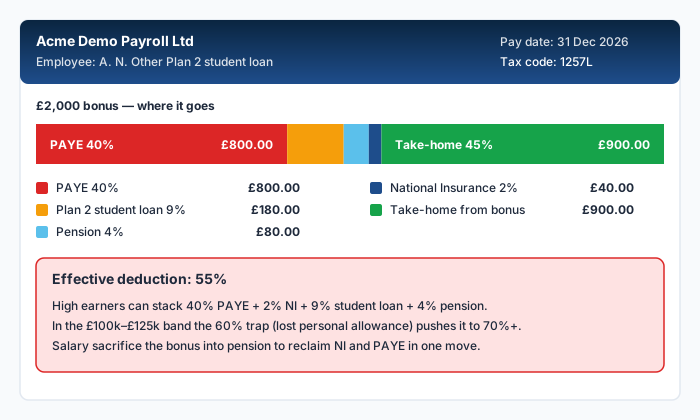
There is no "bonus tax rate"
The first thing to clear up: HMRC does not have a special tax rate for bonuses. Every pound of a bonus is taxed at the same income tax and National Insurance rates as the rest of your salary. So why does the deduction look so heavy?
Three things stack on top of each other in a single payslip:
- Income tax at your marginal rate
- National Insurance
- Possibly student loan repayment
When all three apply at higher-rate marginal levels, the combined deduction can easily reach 47% to 53%. That is the "50%" most people are seeing.
The real composition of "50% bonus tax"
For a higher-rate taxpayer in 2026/27 receiving a bonus that pushes total earnings above £50,270:
- 40% income tax on the higher-rate portion
- 2% NI (because the bonus exceeds the Upper Earnings Limit)
- 9% student loan Plan 2 (if applicable)
That is 51% before pension or other deductions. The number is real - but it is not "bonus tax", it is your normal marginal rate.
Cumulative PAYE: why one bad payslip looks worse than a year of bonuses
UK PAYE is "cumulative" by default. Every payslip looks at year-to-date pay, recalculates total tax due, and collects the difference between what you have paid and what you now owe. When a £5,000 bonus drops in the middle of the year, your year-to-date earnings jump - but your year-to-date allowance only grows by one month's worth.
The result: tax due jumps by more than 20% of the bonus. Read our PAYE guide for a deeper dive.
Worked example: the cumulative crunch in 2026/27
Salary £52,000 a year, code 1257L, paid monthly. £5,000 bonus paid in month 6 (September).
- Normal monthly gross: £4,333.33
- Normal monthly tax: (£3,141.67 × 20%) + (£144.16 × 40%) = £628.33 + £57.67 = £686.00
- September gross: £4,333.33 + £5,000 = £9,333.33
- Cumulative gross months 1-6: 5 × £4,333.33 + £9,333.33 = £30,999.98
- Cumulative Personal Allowance: 6 × £1,047.50 = £6,285.00
- Cumulative taxable: £30,999.98 - £6,285.00 = £24,714.98
- Basic-rate band available to month 6: 6 × £3,141.67 = £18,850.02
- Above the basic band: £24,714.98 - £18,850.02 = £5,864.96 at 40%
- Cumulative tax due: (£18,850.02 × 20%) + (£5,864.96 × 40%) = £3,770.00 + £2,345.98 = £6,115.98
- Tax already paid (months 1-5): 5 × £686.00 = £3,430.00
- September tax: £6,115.98 - £3,430.00 = £2,685.98
- NI on September pay, using HMRC's monthly thresholds of £1,048 and £4,189: 8% × (£4,189 - £1,048) + 2% × (£9,333.33 - £4,189) = £251.28 + £102.89 = £354.17
September net is £6,293.18, against £3,393.16 in a normal month. Strip out the normal month and the bonus itself has cost £2,000 in extra tax (40% of £5,000) and £100 in extra NI (2%, because the whole bonus sits above the Upper Earnings Limit). That is £2,100, or 42%.
Add a Plan 2 student loan at 9% and you lose a further £450, taking the total to £2,550 - the 51% that produces the "half my bonus went" reaction.
The figure looks dramatic because the higher-rate portion of the bonus only "exists" once cumulative pay crosses £50,270 / 12 x months. The lower-rate slice is taxed at 20%; the higher-rate slice is taxed at 40%; the average ends up around 35-40%, plus 2% NI on the slice above the Upper Earnings Limit.
What "marginal rate" actually means
Your marginal rate is the rate that applies to the next pound you earn - not the average rate on all your income. For 2026/27:
- 20% basic rate on income £12,571 - £50,270
- 40% higher rate on income £50,271 - £125,140
- 45% additional rate above £125,140
- Personal allowance taper between £100,000 and £125,140 creates a 60% effective marginal rate
- Plus 8% or 2% NI
- Plus 9% (Plan 1/2/4/5) or 6% (Postgrad) student loan if applicable
A bonus is taxed at whatever marginal rate applies once stacked on top of your salary. If you earn £100,000 and receive a £20,000 bonus, the bonus is mostly taxed at 60% effective rate because of the personal allowance taper, plus 2% NI = roughly 62%.
The 60% trap
Between £100,000 and £125,140, your personal allowance is reduced by £1 for every £2 you earn. The effect is a marginal rate of 60% on income in that band. A £10,000 bonus paid to someone earning £100,000 leaves only £4,000 net of income tax, before NI.
If you are anywhere near £100,000, talk to your employer about pension salary sacrifice for the bonus. It is the only legitimate way to dodge the 60% trap.
Will you get any of it back?
Yes - in most cases, yes - but only if subsequent months bring your year-end total below the higher-rate threshold or below the personal allowance taper.
Three scenarios:
- Bonus pushes you into higher rate temporarily: subsequent months refund the excess via cumulative PAYE
- Bonus stays at your normal rate: nothing comes back - the maths is just front-loaded
- You leave the job after the bonus: you may need a P800 reconciliation or Self Assessment to recover any over-deduction
Worked example: the rebate over the year
Continuing the £52,000 salary plus £5,000 bonus example. By March, year-to-date earnings are £57,000. At that level:
- Taxable income: £57,000 - £12,570 = £44,430
- Income tax for the year: (£37,700 × 20%) + (£6,730 × 40%) = £7,540 + £2,692 = £10,232
This is the case where nothing comes back. The bonus has permanently pushed £6,730 of income into the higher rate, so the £2,686 collected in September is the right amount, not an overpayment. Months 7 to 12 revert to the normal £686 a month and the year totals £10,232.
A refund only appears where the bonus pushed cumulative pay over a threshold that later months pull it back below - for instance a £40,000 salary with a one-off bonus in month 3. There is no separate "rebate" line when that happens; the smaller deductions in later months are the rebate.
If you are on a non-cumulative (Week 1 / Month 1) tax code, the cumulative correction does not happen. You may need to claim a refund directly.
If your tax code is on a Month 1 or Week 1 basis (e.g. 1257L M1), bonuses are taxed in isolation and overpayments do not auto-correct. After your bonus payslip, log in to your personal tax account and check the code. If it is still emergency, push HMRC for a cumulative reissue.
Reduce the bite - legitimately
Three ways UK employees actually trim bonus tax:
- Bonus sacrifice into pension: most efficient; saves income tax and NI
- Charity payroll giving: deductible from gross before tax
- Buy-as-you-earn (BAYE) shares: tax and NI free if held five years
You arrange these before the bonus is paid; once it has been processed, the only retrospective claim is via Self Assessment for higher-rate pension relief.
Use our take-home calculator to model how a sacrifice changes things.
Frequently Asked Questions
Does HMRC tax bonuses at 50%?
No. There is no specific bonus tax. The 50% impression comes from a combination of higher-rate income tax (40%), NI (2%), and possibly student loan (9%) hitting a single payslip at the same time.
Will my bonus tax fix itself?
Usually yes, if your tax code is cumulative. Subsequent months will collect slightly less tax until your year-to-date totals match the correct annual figure.
My code is BR or 0T - will I get the bonus tax back?
Possibly not automatically. BR and 0T flat-rate codes do not run a cumulative calculation. You may need a P800 or Self Assessment refund.
Should I sacrifice my bonus into my pension?
If you are anywhere near the £100,000 personal allowance taper, almost certainly yes. The marginal rate there is 62% including NI, which makes pension sacrifice extremely efficient.
Why does my student loan deduction look huge in the bonus month?
Student loan repayment is calculated per pay period, not cumulatively. A bonus inflates the period's gross, so the deduction inflates with it. Unlike income tax, the over-deduction does not auto-correct - you can claim a refund from the Student Loans Company at year-end.
Sources
Ready to check your own payslip?
Enter your figures and get an instant AI-powered analysis. Free, private, no signup.
Check my payslip freePayslipIQ provides educational information and estimated calculations only. It does not provide tax, legal, financial, payroll, accounting, pension, benefits or employment advice. Always verify your payslip, tax code, deductions and take-home pay with your employer's payroll department, HMRC, your pension provider, a qualified accountant, tax adviser or another appropriately qualified professional.