PAYE stands for Pay As You Earn. It is the system HMRC uses to collect income tax and National Insurance from employees directly through their wages. When you see "PAYE" or "Tax" on your payslip, it refers to the income tax your employer has deducted on HMRC's behalf before paying you.
To check whether the tax, NI and PAYE lines look right on your own slip, see How do I check my payslip is correct?.
Want to check if your own payslip adds up?
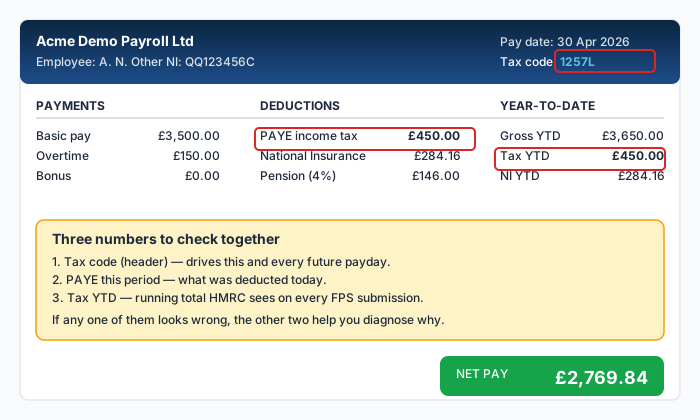
How PAYE works in practice
Rather than sending you a tax bill at the end of the year, HMRC requires your employer to deduct income tax from each pay packet. Your employer uses your tax code to work out how much of your pay is tax-free and how much should be taxed.
The calculation is cumulative. From 6 April (the start of the UK tax year), your employer keeps a running total of your earnings and your tax-free allowance. Each pay day, they calculate the total tax due on your cumulative earnings, then subtract the tax already deducted in previous pay periods. The difference is the tax for the current period.
This cumulative approach means that if you earn more in one month (because of a bonus, for example), the extra tax is spread fairly across the year rather than creating a permanent spike.
The tax bands that apply
For the current tax year in England, Wales, and Northern Ireland, income tax is charged at three rates:
| Band | Annual taxable income | Rate |
|---|---|---|
| Basic rate | £12,571 to £50,270 | 20% |
| Higher rate | £50,271 to £125,140 | 40% |
| Additional rate | Above £125,140 | 45% |
The Personal Allowance of £12,570 is the amount you can earn before any tax is due. Scottish taxpayers have different bands and rates, applied when the tax code carries an S prefix.
Worked example
You earn £35,000 per year, paid monthly, on tax code 1257L.
- Annual taxable income: £35,000 - £12,570 = £22,430
- All of this falls within the basic rate band
- Annual tax: £22,430 × 0.20 = £4,486.00
- Monthly tax: £4,486.00 / 12 = £373.83
Your payslip should show approximately £373.83 in PAYE tax each month. The exact figure may vary by a pound or two because of the cumulative rounding method.
PAYE only covers income tax. National Insurance contributions are calculated separately using different thresholds and rates. Both appear as deductions on your payslip, but they are distinct charges.
Why your PAYE amount might change
Several things can cause the tax figure on your payslip to vary from month to month:
- A pay rise or bonus increases your taxable income for that period, so more tax is deducted.
- A tax code change from HMRC adjusts your Personal Allowance up or down, changing the amount of tax-free pay you receive each period.
- Crossing a tax band threshold means part of your income is taxed at a higher rate. If a bonus pushes your cumulative earnings into the higher rate band, you will see a larger deduction that month.
- Cumulative catch-up after starting a new job mid-year can result in lower tax in the first few months (because unused allowance from earlier months is applied) or higher tax if you were previously on an emergency code.
If your PAYE figure looks unexpectedly high, our guide on why your tax might be high this month covers the most common reasons.
PAYE and your tax code
Your tax code is the instruction that drives the PAYE calculation. The standard code 1257L tells your employer to give you £12,570 of tax-free income per year. If your code is different, the tax-free amount changes accordingly.
Common codes and their effect on PAYE:
- 1257L: standard Personal Allowance of £12,570
- BR: no allowance; all pay taxed at 20%
- D0: no allowance; all pay taxed at 40%
- NT: no tax deducted at all
- K codes: your allowance is negative (you owe tax on benefits), so extra tax is collected
You can check whether your tax code is producing the right PAYE deduction by using our payslip checker. For a full breakdown of how 1257L works, see our 1257L tax code guide.
If your payslip shows "BR" as your tax code and you only have one job, you may be missing your Personal Allowance entirely. This is a common issue when a P45 has not been processed. It can be worth contacting your payroll department or HMRC to get it corrected.
What PAYE does not cover
PAYE collects income tax and Class 1 National Insurance from employment income. It does not cover:
- Tax on self-employment income (collected through Self Assessment)
- Capital Gains Tax
- Tax on rental income (unless HMRC has adjusted your tax code to collect it)
- Student loan repayments (these appear as a separate deduction, though they are also collected through payroll)
If you have income from sources other than employment, you may need to file a Self Assessment tax return in addition to paying tax through PAYE.
Frequently Asked Questions
Is PAYE the same as income tax?
PAYE is the collection system, not the tax itself. Income tax is the charge; PAYE is the method by which it is deducted from your wages before you receive them. The amount labelled "PAYE" or "Tax" on your payslip is your income tax deduction.
Do all employees pay PAYE?
All employees whose earnings exceed the Personal Allowance will have income tax deducted through PAYE. If you earn below £12,570 per year and have the correct tax code, no income tax will be deducted, though your employer still operates PAYE for National Insurance purposes.
Can I opt out of PAYE?
No. If you are employed, your employer is legally required to operate PAYE. The only way to manage your own tax payments is to be self-employed, in which case you pay through Self Assessment instead.
Why does my PAYE figure differ from my colleague's even though we earn the same?
Your tax codes may be different. If one of you has a reduced Personal Allowance (due to benefits in kind, for example), they will pay more tax. Year-to-date earnings can also differ if one of you started the job partway through the tax year.
How do I check if my PAYE deduction is correct?
Compare the figure on your payslip with a manual calculation using your tax code and gross pay, or use our payslip checker for an instant comparison against current HMRC rates.
Sources
Ready to check your own payslip?
Enter your figures and get an instant AI-powered analysis. Free, private, no signup.
Check my payslip freePayslipIQ provides educational information and estimated calculations only. It does not provide tax, legal, financial, payroll, accounting, pension, benefits or employment advice. Always verify your payslip, tax code, deductions and take-home pay with your employer's payroll department, HMRC, your pension provider, a qualified accountant, tax adviser or another appropriately qualified professional.