National Insurance (NI) is a tax on earnings that funds state benefits including the State Pension, statutory sick pay, and maternity allowance. If you are employed in the UK and earn above a certain threshold, your employer deducts NI contributions from your pay alongside income tax. This guide explains how NI is calculated, what the current rates are, and how to check the figure on your payslip.
To check whether the tax, NI and PAYE lines look right on your own slip, see How do I check my payslip is correct?.
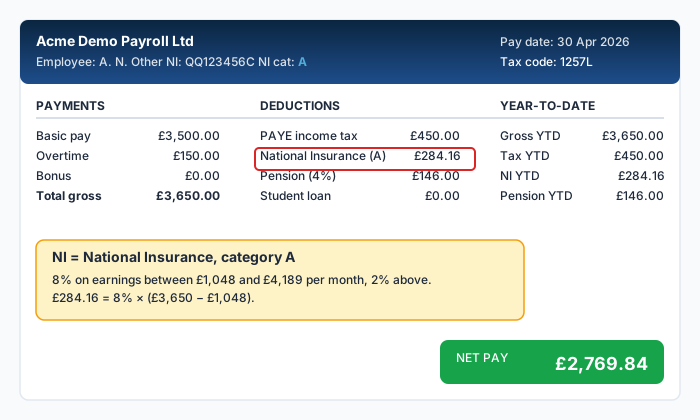
Want to check if your own payslip adds up?
How NI differs from income tax
Although both are deducted from your pay, National Insurance and income tax are separate charges with different rules. Income tax is based on your cumulative earnings and tax code. NI is calculated on each pay period independently, with no cumulative element and no personal tax code.
The key practical differences:
- NI is calculated per pay period, not cumulatively across the tax year
- NI has its own thresholds, which are different from income tax thresholds
- NI stops being payable when you reach State Pension age (income tax does not)
- NI contributions build your entitlement to certain state benefits
NI rates and thresholds for 2026/27
For 2026/27, most employees fall under NI category A. The Class 1 employee rates are:
| Earnings band | Weekly | Annual equivalent | NI rate |
|---|---|---|---|
| Below Primary Threshold | Up to £242 | Up to £12,570 | 0% |
| Primary Threshold to Upper Earnings Limit | £242.01 to £967 | £12,571 to £50,270 | 8% |
| Above Upper Earnings Limit | Over £967 | Over £50,270 | 2% |
Your employer also pays NI on your earnings, at 15% above a Secondary Threshold of £5,000 a year, but this does not appear as a deduction on your payslip. All figures: HMRC, rates and thresholds for employers 2026 to 2027. To run your own salary through these bands, use the National Insurance calculator.
Worked example
You earn £2,800 gross per month (£33,600 per year), paid monthly, NI category A.
- Monthly Primary Threshold: £1,048 (HMRC publishes the monthly figure rather than dividing the annual one, so use £1,048, not £1,047.50)
- Monthly Upper Earnings Limit: £4,189
- NI-able earnings: £2,800.00 - £1,048.00 = £1,752.00
- NI at 8%: £1,752.00 × 0.08 = £140.16
Your payslip should show £140.16 in National Insurance for the month. Payroll software works from HMRC's published weekly and monthly thresholds, so if you divide the annual figures yourself you will be a few pence out. The same sum is already worked out for common salaries on the take-home pay by salary pages.
NI is calculated on each pay period in isolation. Unlike income tax, there is no cumulative catch-up. If you earn nothing in one month and double in the next, the NI for each month is calculated independently.
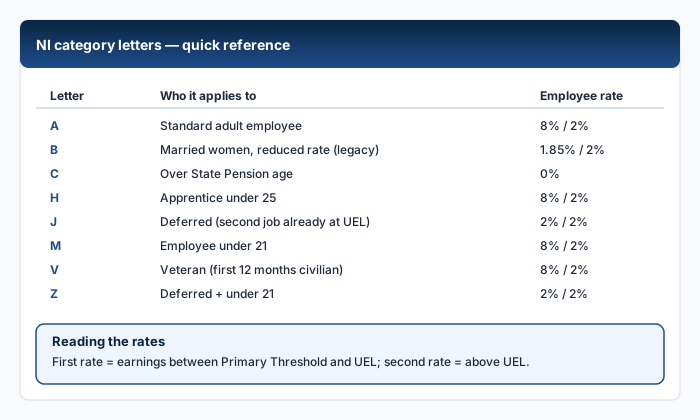
NI category letters
Your NI category letter determines which rates apply to you. Most employees are category A, but other categories exist for specific circumstances:
- A: standard rate for most employees aged 21 and over
- B: married women and widows with a valid reduced-rate election
- C: employees over State Pension age (no employee NI, but employer NI still applies)
- H: apprentices under 25
- M: employees under 21
- V: veterans in their first year of civilian employment
Your category letter appears on your payslip, usually near the NI deduction. If you are unsure which category applies to you, our guide on NI category letters explains each one.
What NI pays for
Your NI contributions build your entitlement to several state benefits:
- State Pension: you need 35 qualifying years of NI contributions to receive the full new State Pension, and voluntary contributions can fill a missing year
- Contribution-based Jobseeker's Allowance
- Employment and Support Allowance
- Maternity Allowance
- Bereavement benefits
If you have gaps in your NI record (for example, from periods of unemployment or low earnings), you can check your record and make voluntary contributions to fill them. This can be done through your Personal Tax Account on GOV.UK.
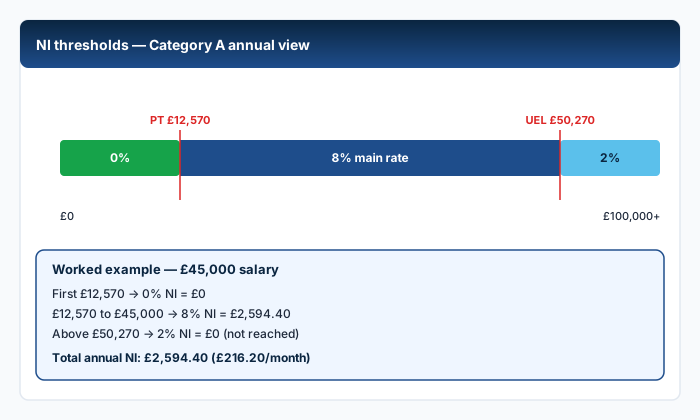
Checking NI on your payslip
To verify your NI deduction:
- Find your gross pay for the period
- Subtract the monthly Primary Threshold (£1,048 for monthly pay, £242 for weekly)
- Multiply the result by 0.08 (assuming you are below the Upper Earnings Limit)
- Compare with the NI figure on your payslip
If the figures do not match, check your NI category letter. Categories B, H, and M have different rates. You can also run your figures through our payslip checker for a detailed comparison, or model a different salary in the take-home pay calculator.
A common mistake is assuming NI and income tax use the same thresholds. While the Primary Threshold and Personal Allowance are both £12,570 a year in 2026/27, this alignment is not guaranteed and has differed in previous years. Always check the NI thresholds separately.
NI if you have multiple jobs
If you have more than one job, NI is calculated separately for each employment. There is no mechanism for your employers to combine your earnings. This means you could end up paying NI on earnings from one job that, when combined with the other, would push you above the Upper Earnings Limit.
If you believe you have overpaid NI because of multiple jobs, you can apply to HMRC for a refund at the end of the tax year. HMRC may also issue a deferment notice if your combined earnings are expected to exceed the Upper Earnings Limit, which reduces the NI charged on one of your jobs.
Frequently Asked Questions
Do I pay NI if I am self-employed?
Self-employed people pay Class 2 and Class 4 NI through Self Assessment, not through PAYE. The rates and thresholds are different from Class 1 employee contributions - see Class 2 and Class 4 National Insurance for the self-employed.
When do I stop paying NI?
You stop paying employee NI when you reach State Pension age. Your employer continues to pay employer NI on your earnings, but nothing further is deducted from your pay. Your NI category changes to C at that point.
Can I check my NI record online?
Yes. You can view your NI record, including qualifying years and any gaps, through your Personal Tax Account on GOV.UK. The service also shows whether you can make voluntary contributions to fill gaps.
Is NI deducted from my pension income?
No. NI is only charged on employment and self-employment earnings. Pension income, whether from a workplace pension or the State Pension, is not subject to NI, though it may be subject to income tax.
Why is my NI deduction different from my colleague's on the same salary?
The most likely reason is a different NI category letter. For example, employees under 21 (category M) pay a lower rate on earnings up to the Upper Earnings Limit. Differences in salary sacrifice arrangements can also affect the NI-able earnings figure.
Sources
Ready to check your own payslip?
Enter your figures and get an instant AI-powered analysis. Free, private, no signup.
Check my payslip freePayslipIQ provides educational information and estimated calculations only. It does not provide tax, legal, financial, payroll, accounting, pension, benefits or employment advice. Always verify your payslip, tax code, deductions and take-home pay with your employer's payroll department, HMRC, your pension provider, a qualified accountant, tax adviser or another appropriately qualified professional.